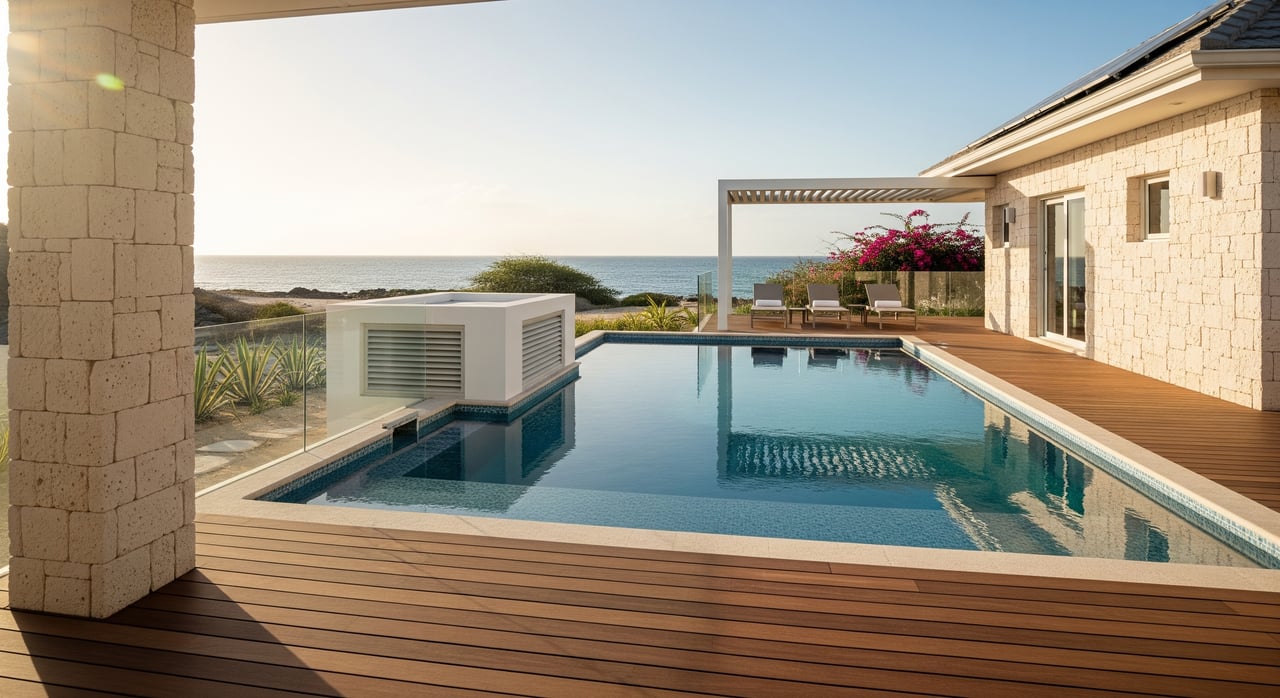
Thinking about a home in Aruba and wondering what your monthly utilities will look like? You are not alone. Electricity, water, propane, septic tank, internet and HOA fees can feel different on an island, especially if you plan to rent your property part-time or manage it from abroad. This guide gives you a clear, practical way to estimate costs, ask the right questions, and spot easy savings before you buy. Let’s dive in.
Why Aruba utility costs feel different
The climate is warm year-round, so cooling is constant. Air conditioning is the main driver of electricity use, followed by pools and water heating. Tourism and short-term rentals can amplify usage, creating month-to-month swings that surprise many second-home owners.
You should also ask about grid policies, renewable incentives and interconnection rules for solar. Some owners add generators or battery backup for reliability. It is smart to check local reliability patterns and common practices in the area you are considering.
Electricity: the biggest line item
What drives your bill
Electricity is usually your largest monthly utility in Aruba. The biggest loads are:
- Air conditioning: efficiency, size, thermostat setpoint, run time, and home insulation/shading matter most.
- Pool equipment: pumps, heaters and chlorinators. Continuous or oversized pumps add up fast.
- Water heating: electric tanks or on-demand units can be significant if set hot or sized large.
- Major appliances: refrigerators, washers and electric dryers. Cooking with electric ovens also adds load.
- Electronics: generally minor compared with cooling and pool equipment.
How billing works
Ask the seller or HOA how electricity is metered and billed. Confirm if the meter is dedicated to your unit or shared. Check billing frequency, payment options, any minimum charges, and whether fuel-surcharge adjustments apply. If you are buying in a condominium, clarify whether any electricity is included in HOA fees and how overages are handled.
Efficiency moves that matter
Small adjustments produce outsized savings in Aruba:
- Install high-efficiency inverter AC units and size them correctly.
- Raise the thermostat a few degrees and use ceiling fans to stay comfortable.
- Add shading and seal air leaks to reduce runtime.
- Replace the pool pump with a variable-speed model and use timers.
- Use LED lighting and efficient laundry and kitchen appliances.
- Consider solar PV and, if relevant, battery storage.
Water:
Billing setups to confirm
Find out whether water is billed directly to your meter or included in HOA fees. Ask if irrigation and pool top-off are separately metered. In multi-unit or rental-oriented properties, clarify whether sub-meters exist for individual units.
Where usage spikes in Aruba
- Irrigation for landscaping and lawns.
- Pool and spa top-offs due to evaporation.
- Frequent laundry for guests or large households.
- Outdoor showers and rinsing after beach days.
Simple estimating tips
Ask the seller for the last 12 months of water bills and note seasonal patterns. If you plan to change the irrigation schedule, pool settings or laundry frequency, adjust accordingly. Also ask about water pressure, any local restrictions, and whether the home uses additional filtration or softening that may affect maintenance costs.
Conservation and quality checks
- Install low-flow fixtures and water-efficient appliances.
- Use smart irrigation controllers and drought-tolerant landscaping.
- Consider a pool cover to slow evaporation.
Gas and propane: what to expect
Common uses and delivery models
Many Aruba homes use bottled or bulk propane for cooking. Some properties also use propane for water heaters or pool heaters. Bottled cylinders can be exchanged or refilled, while bulk tanks are typically filled on contract. Confirm whether tanks are owned by the homeowner or the supplier.
Budgeting questions to ask
- What size cylinders or tank does the home use, and where is it located?
- How often does the seller refill, and at what typical volume?
- If the home has gas water heating or a pool heater, what are the seasonal consumption patterns?
Internet, phone and TV: reliability matters
In Aruba, essential internet services are reliable and widely accessible, with SETAR being the primary and most commonly used internet provider on the island. SETAR is a government-owned company and offers island-wide coverage, including fiber-optic internet, mobile services, and television packages. Because of its strong infrastructure and local support, it’s the go-to option for most homes, businesses, and rental properties.
In addition to SETAR, there are a few alternative providers, but SETAR remains the most established and dependable choice, especially for consistent speeds and service availability across different neighborhoods.
HOA and condo fees: what they include
Typical inclusions
Condominium and gated-community HOAs often cover common-area electricity, water for landscaping, security, pool and grounds maintenance, trash removal, building insurance, property management and reserve contributions. Some HOAs also include certain utilities for individual units, though this is less common. Always ask which utilities are included and how overages are billed.
Short-term rental HOAs
Vacation-rental oriented communities may carry higher operating costs, add-on services and specific rules about rentals. Confirm rules and fees tied to short-term rentals if that is part of your plan.
Questions to put in your offer
- Which utilities are included in the monthly HOA fee?
- How are overages or shared utilities allocated?
Unique island usage patterns to plan for
Year-round cooling demand and pool operation are the norm in Aruba. Short-term rentals increase laundry, cleaning, and water use, and push AC systems harder. Salt air accelerates wear on HVAC, pool equipment and appliances, which can add maintenance costs. Build a reserve for regular coil cleanings, pool pump inspections and timely replacements.
First 90 days: quick wins to control costs
- Set thermostats a few degrees higher and use programmable or smart controls to limit runtime when unoccupied.
- Service AC units, clean coils and verify correct refrigerant charge to restore efficiency.
- Swap to inverter ACs where practical and seal obvious air leaks around doors and windows.
- Replace the pool pump with a variable-speed model, cut unnecessary runtime and add timers.
- Convert to LED lighting and confirm dryers, fridges and dishwashers are high efficiency.
- Install low-flow fixtures, optimize irrigation and consider drought-tolerant plantings.
- Evaluate solar PV and storage after verifying interconnection and any credit rules with the utility.
- Consider a generator or battery for backup to protect comfort and equipment during outages.
FAQs
In Aruba, which utility is typically the largest monthly cost?
- Electricity is usually the largest expense, driven by air conditioning and, for many homes, pool equipment.
Is rooftop solar practical in Aruba and will exports be credited?
- Solar is often viable, but you must verify interconnection requirements and any net-metering or export credit rules with the local utility before investing.
How do short-term rentals affect utility bills on the island?
- Rental turnover increases AC runtime, laundry and water use, which can cause higher and more variable monthly bills.