Is your ocean-view condo in Oranjestad priced to win the market, or just listed to test it? If you are debating a price or evaluating an offer, you have probably noticed how two units with similar square meters can sell for very different numbers. You want clarity and confidence before you move. In this guide, you will learn the local factors that truly drive price, how to quantify them, and the exact data you need to set a smart, defensible number. Let’s dive in.
What drives value in Oranjestad ocean-view condos
Location and the view you actually get
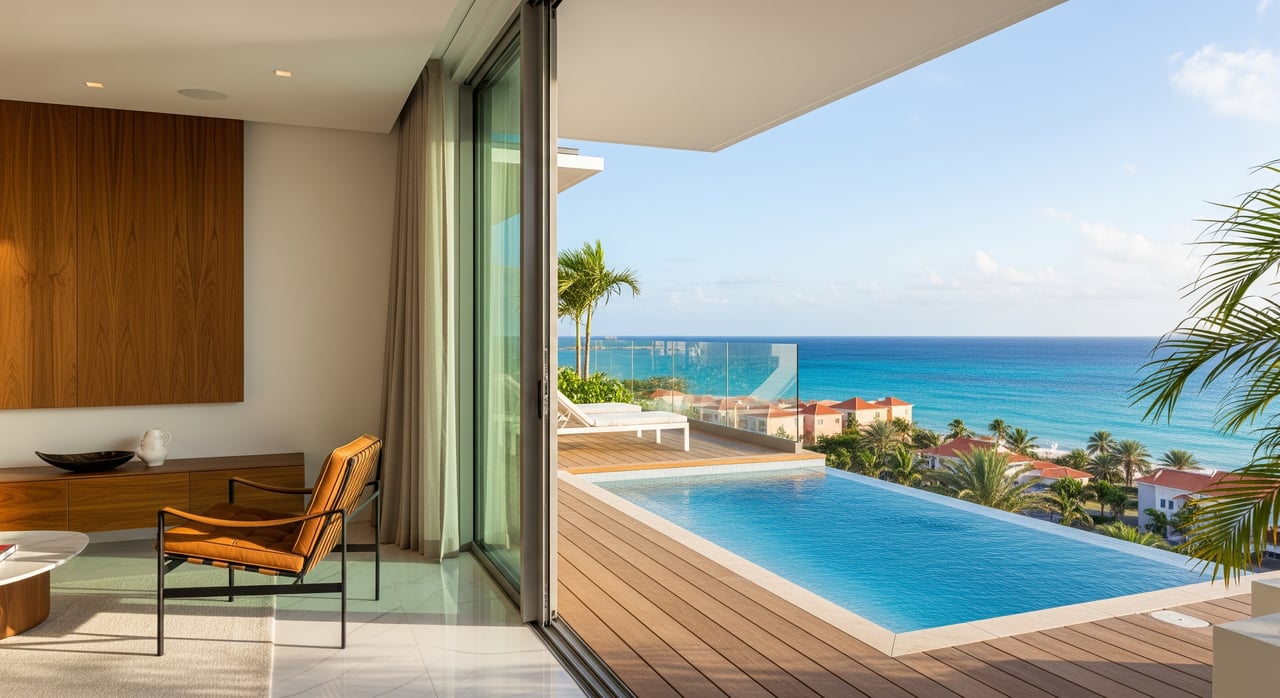
Not all ocean views are equal. In Oranjestad, direct beach frontage or an unobstructed open-ocean view typically commands a premium over harbor, canal, or partial views. Orientation matters too. Your unit’s direction, nearby building heights, and protected view corridors determine if your sightline stays open over time or risks future blockage. Proximity to downtown shops, the cruise terminal, and main transport routes can also lift demand, especially for short-term rentals and resale.
Floor height and sightlines
Higher floors often sell for more thanks to broader horizons and privacy. The premium per floor varies by building. In properties close to the waterline, even one or two levels up can deliver a dramatic vista improvement. Balcony width, glazing, and any obstructions can change perceived value between otherwise similar units on the same floor.
Building quality and maintenance
Salt air accelerates wear. Buildings with high-quality exterior finishes, recent façade work, corrosion-resistant systems, and strong maintenance programs are more attractive to buyers and insurers. Resort-style developments with hotel-level amenities and professional on-site management often trade at a premium compared to purely residential buildings.
Amenities and on-site services
Pools, gyms, restaurants, concierge, valet, and security matter. Amenities that remove operating hassle for absentee owners or STR operators, like on-site management and rental programs, can increase sale price and rental performance. Ground-floor retail can be convenient for some buyers and less appealing for others depending on layout and noise.
Rental potential and rules
Oranjestad benefits from steady leisure and cruise tourism. Units with verified STR histories that show strong occupancy and average daily rate can justify higher pricing, especially to investor buyers. Always confirm current licensing, permit requirements, and HOA rental rules. What is allowed in one building may be restricted in another, which directly affects value.
HOA health and monthly fees
Healthy reserves, transparent budgets, and no looming special assessments support price. Low reserves or announced capital projects often lead buyers to discount their offers to cover the expected owner share. Monthly fees and special levies change net income for investors and can limit your buyer pool if costs are high relative to peers.
Physical risk and insurance
Aruba sits south of the main Caribbean hurricane belt, so storm frequency is lower than on many islands. That said, coastal properties still face long-term sea-level and corrosion considerations that influence insurance costs and lender views. Building elevation, local flood maps, and protective infrastructure are part of a savvy pricing conversation.
Market liquidity and transaction costs
Time to sell, seasonality, and investor concentration all shape achievable pricing. Transfer taxes, notary and closing costs affect net proceeds and buyer willingness. Smart sellers and buyers factor these into final price strategy and negotiation.
How to price your unit the smart way
Start with the right comparables
Use recent closed sales of similar units in the same building first. If you lack enough data, widen to nearby buildings with similar view quality and construction. Focus on size in square meters, bedroom count, finish level, and most importantly, view classification. Avoid generic percentage adjustments borrowed from other markets. Local paired sales are your best guide.
Layer in income if you rent
If the unit is used for STR, run an income approach alongside sales comps. Use verified historical data for at least 12 months, preferably 24 to 36. Model occupancy, ADR, HOA fees, management costs, cleaning, utilities, and insurance. Apply a cap rate appropriate for Aruba condo investments and reconcile that value with your sales-comparison result.
Quantify view and floor premiums locally
Derive a view premium by comparing price per square meter among units with full ocean, partial ocean, and no ocean view. For floor effects, analyze price per square meter by floor band within the same building if data allows. Validate any per-floor increment against market demand and rental rate differences by floor.
Adjust for amenities and management
If on-site amenities or a professional rental program elevate occupancy or ADR, attribute the uplift to income and capitalize it. Alternatively, isolate sales within the project that have or lack a specific amenity to estimate a direct price effect.
Factor HOA reserves and assessments
If a special assessment is announced, reduce value by the owner’s share of that cost or expect buyers to request a price reduction or a seller credit. Where reserves are low or maintenance is deferred, reflect near-term repairs as an increased operating cost in your income model or as a negotiated discount.
Model physical risk and insurance
Higher insurance premiums reduce investor cash flow and can narrow the buyer pool. Reflect that cost in your income analysis. For long holding periods, some buyers will ask for a higher yield to account for uncertainty tied to sea-level scenarios. Be ready with elevation data and any coastal protective measures your building has in place.
Reconcile and set a price range
Price is a range, not a single number. Present a bracket based on comps and the income approach, then test sensitivity for occupancy, ADR, and any assessments. Tie your final ask to a realistic time horizon to sell. In a thinner market, liquidity often rewards sharper initial pricing.
Data checklist to get valuation right
Use this list to gather the documents and facts that make pricing defensible.
- Property and unit specifics: exact address and unit number, cadastral or registry ID, floor plan and photos, gross and net living area in square meters, balcony size and whether outdoor space is included in the stated area. Include floor level, orientation, parking and storage, bedroom and bathroom count, furnishing status, and dates of recent upgrades.
- Building and HOA documents: current HOA budget, fee schedule, insurance coverage, reserve study if available, minutes from recent meetings, and a summary of planned capital projects or assessments. Include bylaws on rentals and any management agreements or rental program terms.
- Rental performance: monthly occupancy, ADR, gross revenue, management fees, and net income for the last 12 to 36 months. If the unit participates in a rental pool, provide the revenue split, blackout dates, and owner-use rules.
- Market comparables and macro markers: recent closed sales of similar units, active and expired listings, days on market, and sale-to-list ratios where available. Add tourism seasonality markers if you use an income approach.
- Physical risk and insurance: building elevation, local flood map references if available, current insurance coverage and premium benchmarks, and any municipal shoreline works or protective infrastructure details.
Buyer tips to validate price before you offer
- Walk the view: verify what you actually see from balcony height, seated and standing. Check for potential future obstructions based on nearby parcels and allowable heights.
- Confirm rules: read the HOA bylaws for rental restrictions, pet and usage rules, and verify licensing requirements that apply to short-term rentals.
- Read the minutes: look for planned capital projects, elevator or façade work, seawall or roofing schedules, and any referenced assessments.
- Test the numbers: stress-test income by lowering occupancy and ADR to conservative levels. Re-check yields after including HOA, management, cleaning, utilities, and insurance.
- Compare like for like: prioritize comps with matching view class and similar floor level. Adjust only where you have support from paired sales.
Seller strategies to protect and enhance value
- Document performance: if you rent, prepare a clean income package with occupancy, ADR, gross and net figures. Buyers pay for documented performance, not projections.
- Preempt the questions: organize HOA budgets, reserve studies, minutes, and insurance summaries. Transparency builds trust and shortens negotiations.
- Highlight the view: list orientation, floor level, balcony size, and glazing details. Professional photos from realistic sightlines help buyers justify your price.
- Show maintenance quality: note corrosion-resistant systems, recent façade work, and any proactive building upkeep. Coastal confidence encourages stronger offers.
- Price to liquidity: base your ask on recent local comps and reconcile with income value. If the market is thin, a precise ask can attract serious buyers faster.
Quick, reliable methods for adjustments
- View differentials: use paired sales or price-per-square-meter groupings by view type within the same or highly comparable buildings. Avoid generic percentages from other markets.
- Floor increments: if you lack sufficient data by floor, start with a cautious per-floor estimate and validate it against rental rate differences or buyer feedback within the building.
- Amenities and programs: model the portion of ADR or occupancy advantage attributable to amenities and capitalize the uplift to estimate value impact.
- Assessments and reserves: deduct known owner shares of upcoming projects or reflect the cost through income reductions, depending on timing and certainty.
- Cap rate alignment: select cap rates that reflect whether the buyer is an owner-user with incidental income or a pure investor. Validate with local transactions whenever possible.
A simple workflow to get to a smart price
- Gather unit and building documents from the checklist above.
- Pull at least 3 to 6 closed comps, prioritizing your building. Widen only when necessary and match view quality.
- Compile 12 to 36 months of verified rental data and normalize for seasonality.
- Review HOA reserves, budgets, and minutes for assessments. Flag timing and owner share.
- Run a sales comparison and an income model where relevant. Reconcile results and document each adjustment.
- Perform sensitivity testing for occupancy, ADR, and potential assessments. Present a price range tied to time-to-sell expectations.
Copy-paste input template for a custom pricing analysis
Please provide the following for a custom pricing analysis:
- Property address and unit number: [address, unit]
- Unit size and layout: [m2, bedrooms, bathrooms, balcony size]
- Floor level and orientation: [floor, north/south/east/west]
- Furnishing status and recent renovations: [furnished status, dates and scope]
- HOA documents attached: [budget, reserve study or minutes, bylaws]
- Rental history for last 12–36 months: [monthly gross revenue, occupancy %, ADR, management fees]
- In a hotel or rental pool: [yes/no]. If yes, include agreement and split schedule.
- Known assessments or capital projects: [description, amount, timing]
- Comparable sales or active listings to consider: [links or docs]
- Desired analysis type: [market price estimate, quick price range, formal appraisal, investor cash-flow valuation]
Why work with a boutique, data-led team
You deserve pricing that reflects the real power of your view, your building’s maintenance quality, and documented rental performance. A boutique, founder-led team brings valuation rigor, editorial-grade presentation, and international reach to make your property visible to the right buyers. That mix of financial discipline and bespoke marketing often produces cleaner negotiations and more predictable outcomes.
Ready to price with confidence or validate a target? Request a Private Consultation with the experts at Bold Real Estate Aruba.
FAQs
How much is an ocean view worth in Oranjestad?
- It depends on the building, floor, and actual sightline. Use paired sales or price-per-square-meter comparisons among full, partial, and non-ocean views within comparable buildings to quantify the premium.
Do higher floors always sell for more in Oranjestad?
- Often yes, due to better views and privacy, but not always. Confirm with local sales by floor, and weigh tradeoffs like elevator access and any HVAC or insurance differences.
How do HOA reserves and special assessments impact price?
- Buyers typically discount for upcoming projects. Reduce value by the owner’s share of any imminent assessment or factor higher operating costs into an income model when reserves are thin.
Should short-term rental income be included in value?
- Yes for investor buyers. Use verified historic occupancy, ADR, and net income, then apply a locally supported cap rate. Always confirm current licensing and HOA rules first.
Does Aruba’s storm and sea-level risk affect condo values?
- Aruba is south of the main hurricane belt, which lowers typical storm frequency, but insurers and lenders still weigh coastal exposure, elevation, and long-term sea-level considerations when pricing risk.